
Rebated doors
A conventional latch with a metal tongue striking the keeper plate at every closing, and hinges visible from the front — a legible, traditional detail.
On the detail most people never name — where leaf meets frame — and how it decides the character of an entire interior.
There are details in interior architecture that shout, and details that work in silence. Doors belong to the second kind — and their character is decided in a place most people cannot even name: where the leaf meets the frame.
It is there that it is settled whether an interior will feel classical and warm, or of a cool, reduced rigour. The difference between these technologies is not cosmetic. They are successive degrees of one philosophy of design — and at its summit CREADOOR sets something that breaks every rule that came before.
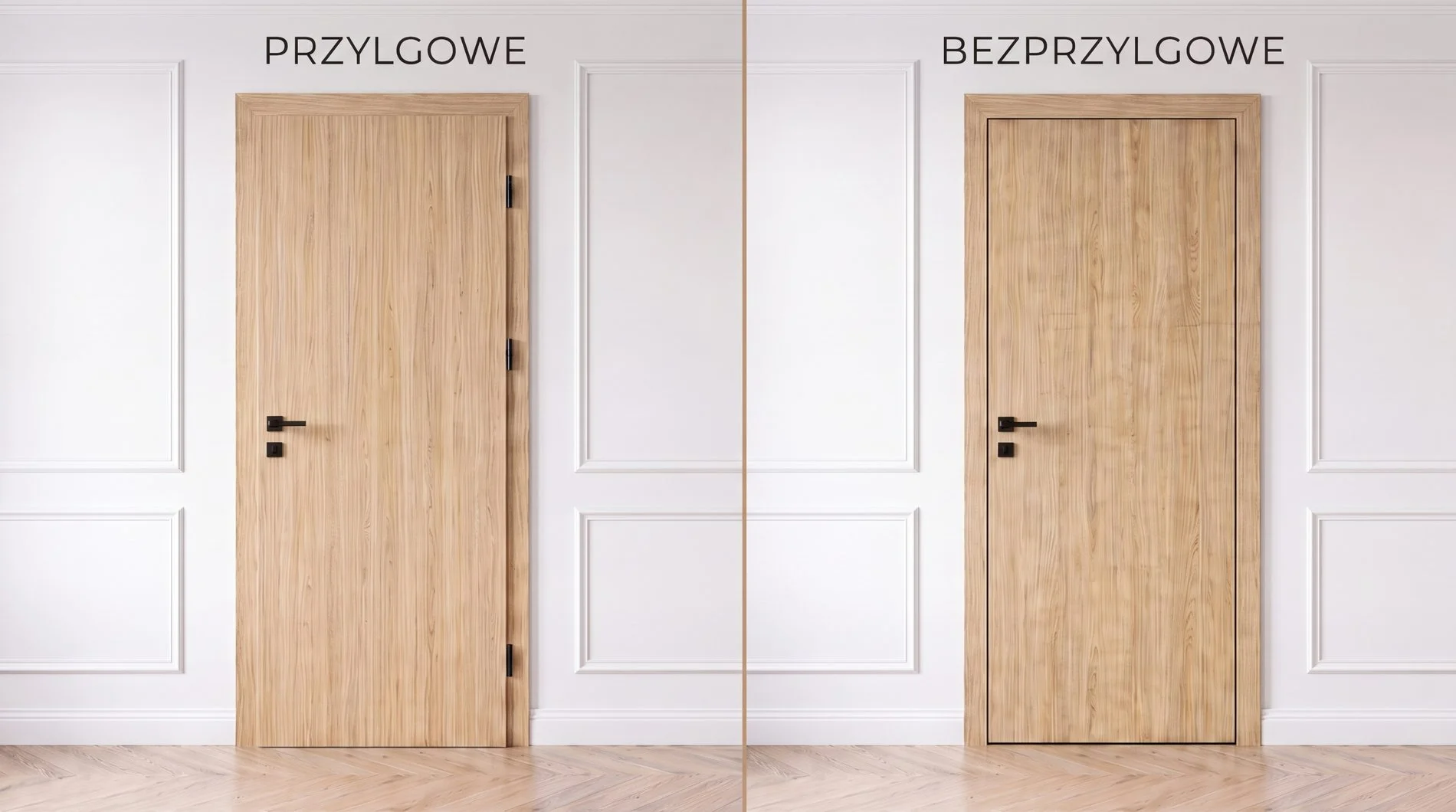
In a rebated door the edge of the leaf is machined to a characteristic step — the rebate. Closed, the leaf overlaps the frame with it, lying over it at the front and standing a little forward of its face. This seemingly small step performs a real function: it masks the installation gap and closes the door with a distinct, “solid” note.
For the client this brings tangible benefits. The rebate is tolerant — it forgives minor irregularities in a wall and asks for no laboratory precision in fitting. It is a proven, affordable and universal solution, at home in classical and period interiors and wherever a door is meant to be a warm, present part of the composition rather than to leave the stage.
Rebateless doors dispense with the step altogether. The edge of the leaf is straight, and the leaf enters the frame evenly, flush with it on one unbroken plane. The gap is taken by a seal concealed in the frame, which also improves the acoustics. The effect is a fluent line in which leaf and frame become one — a detail valued in minimal schemes, where any needless shadow spoils the composition.
That cleanness has its price and its demands. The rebateless leaf calls for precise fitting and a higher order of making — but in return it gives an interior what no other solution can: the discipline of geometry, and the sense that the door was written into the wall rather than added to it. It is worth adding that with us a rebateless leaf always has timber construction — it is this that answers for the better acoustic and thermal behaviour our clients value most.
The philosophy of the face carries over into the fittings — and here the rebateless leaf shows what it can do.
A conventional latch with a metal tongue striking the keeper plate at every closing, and hinges visible from the front — a legible, traditional detail.
A magnetic latch keeps the tongue within its case and releases it silently only at the moment of closing. The hinges may be entirely concealed — a possibility reserved for a leaf flush with its frame.
This is hardware that does not exist for the eye, only for the hand. The door closes softly and quietly — an end to the familiar rattle of tongue against frame.
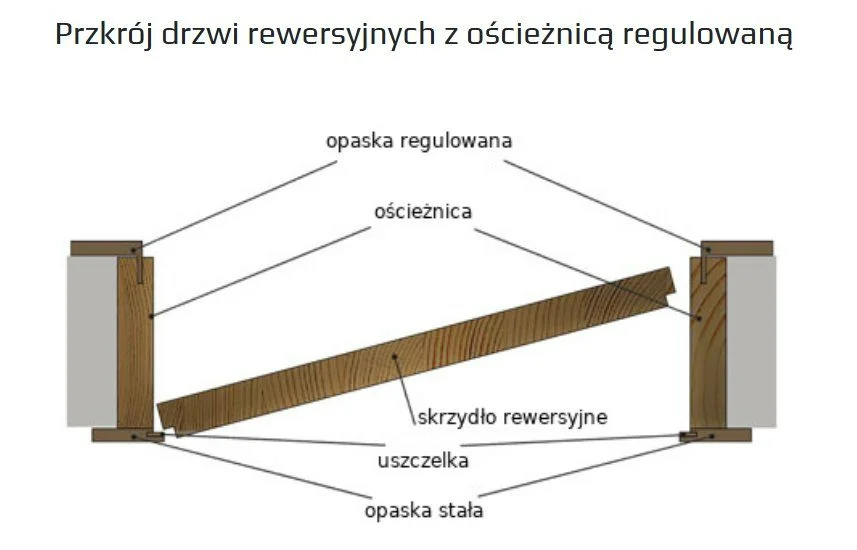
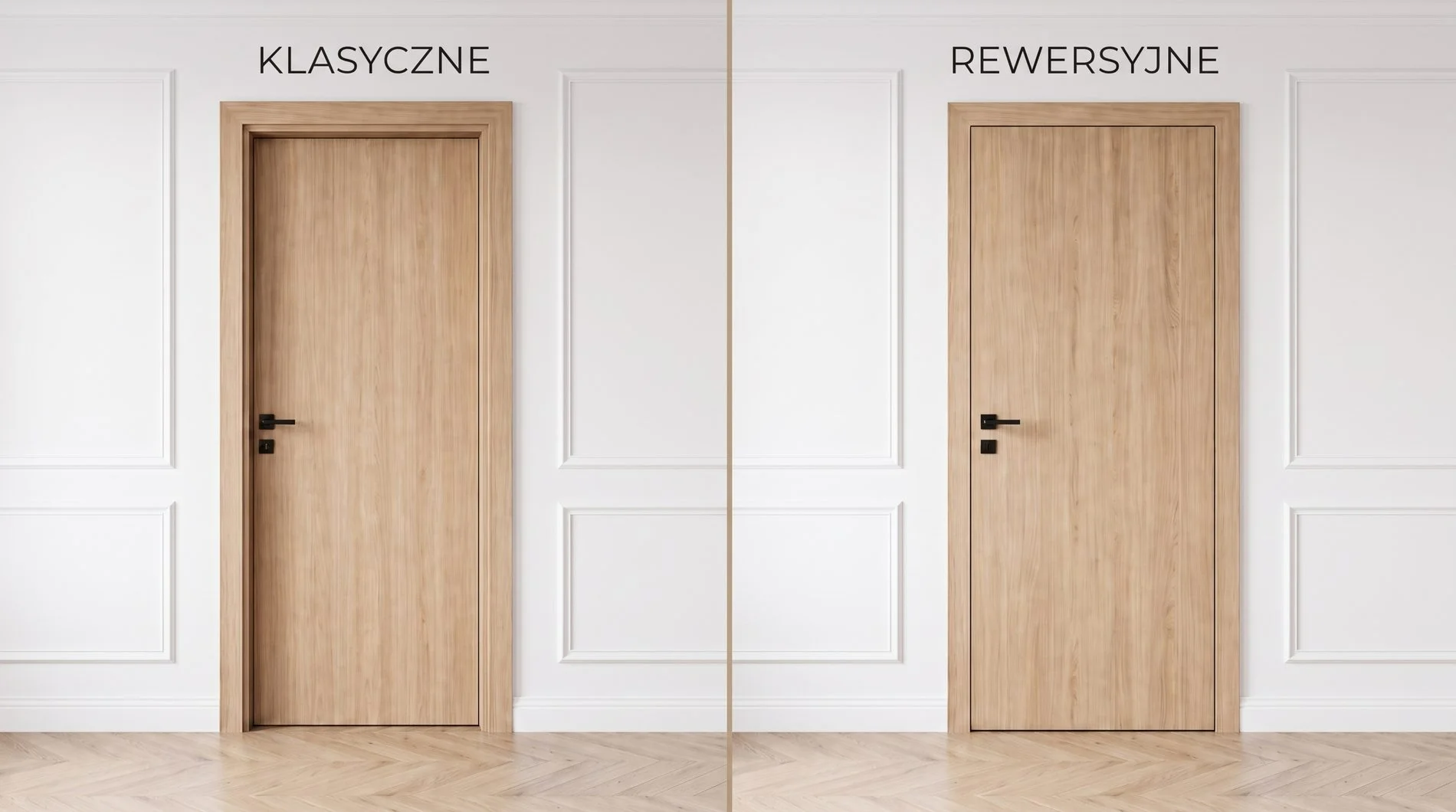
One further solution completes the philosophy of the clean plane. Reversible doors open into the room, but thanks to an inverted rebate the closed leaf sits flush with the architrave — or with the wall — on the outer side.
This allows the leaves of every door to sit flush from the same side, whichever way they open. In a hall or hallway, where one unbroken line matters, it is the detail that decides the coherence of the whole composition.
There comes a moment in the design of an interior when a door ceases to be a door. It is not to present itself, nor to match, nor to close handsomely — it is to disappear. To disappear into the wall so exactly that the eye no longer registers it, and the plane of the room runs unbroken from corner to corner. It is the highest school in the architecture of openings — and it is where joinery ends and engineering precision begins.
The rebateless leaf brought leaf and frame flush. The concealed frame goes a step further: it does away with the architrave and sinks the whole frame into the plane of the wall. The aluminium frame is set in the line of the plaster, with no visible stop bead, and its edge forms a thin, precise border between door and wall. The leaf — always rebateless, and most often over-height — sits flush not only with the frame but with the entire wall. It may be painted in the colour of the wall, finished in the same veneer as the joinery, and not seldom papered together with the wall itself.
Behind that simplicity stands absolute discipline in the making. A concealed frame forgives nothing — not a wall out of true, not a millimetre of slack, not an imprecise joint. It is a technology in which the quality of the material, the precision of the machining and the craft of the fitting decide everything, for there is neither rebate nor architrave behind which anything may be hidden. At CREADOOR we treat it as a display of the workshop's command, in which the “vanishing wall” is the measure not only of the door but of the whole interior.
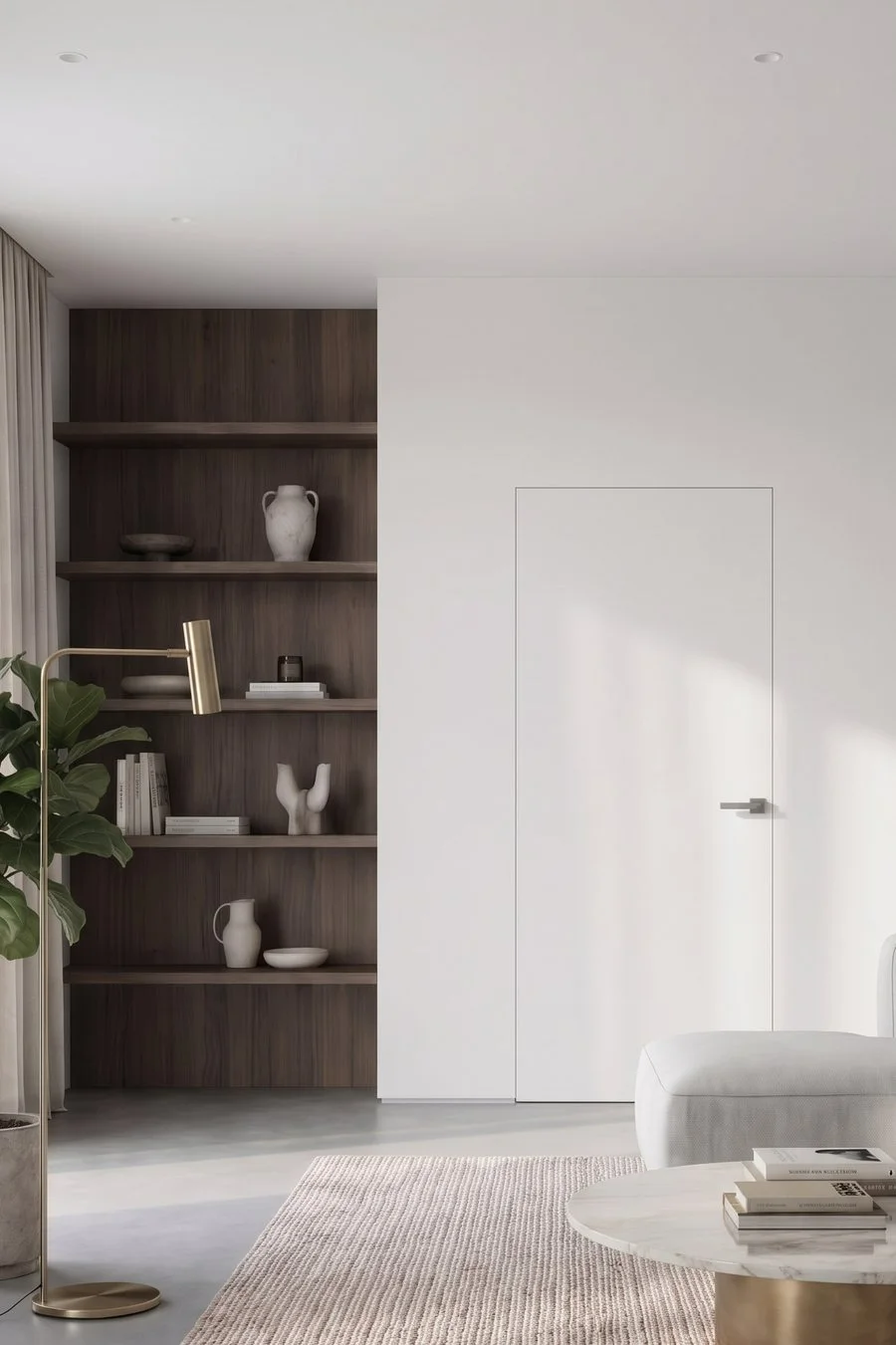
After concealed-frame doors are fitted, clients most often remark on two effects they had not expected: the visual “disappearance” of the door, and a marked ordering of the space. Leaves finished in the colour of the wall become all but invisible, by which hallways and circulation gain calm and lightness. Mirrored leaves, in turn, genuinely improve the proportions of an interior — visually enlarging bathrooms and dressing rooms.
For years the whole trade pursued one thing: perfection in hiding a door. The CREADOOR collections break with that convention — for if a door can already disappear, it may also become, deliberately, an accent. Geometria is the first of two answers, reserved for rebateless doors.
On the smooth face of the leaf appears a precisely burned graphic — a drawing read by light, not by relief. Narrowing lines descend into an elongated diamond, calligraphic and disciplined; elsewhere a single arc takes the place of the whole composition. Once burned, the pattern is lacquered in the chosen colour, so that graphic and ground become one finished surface.
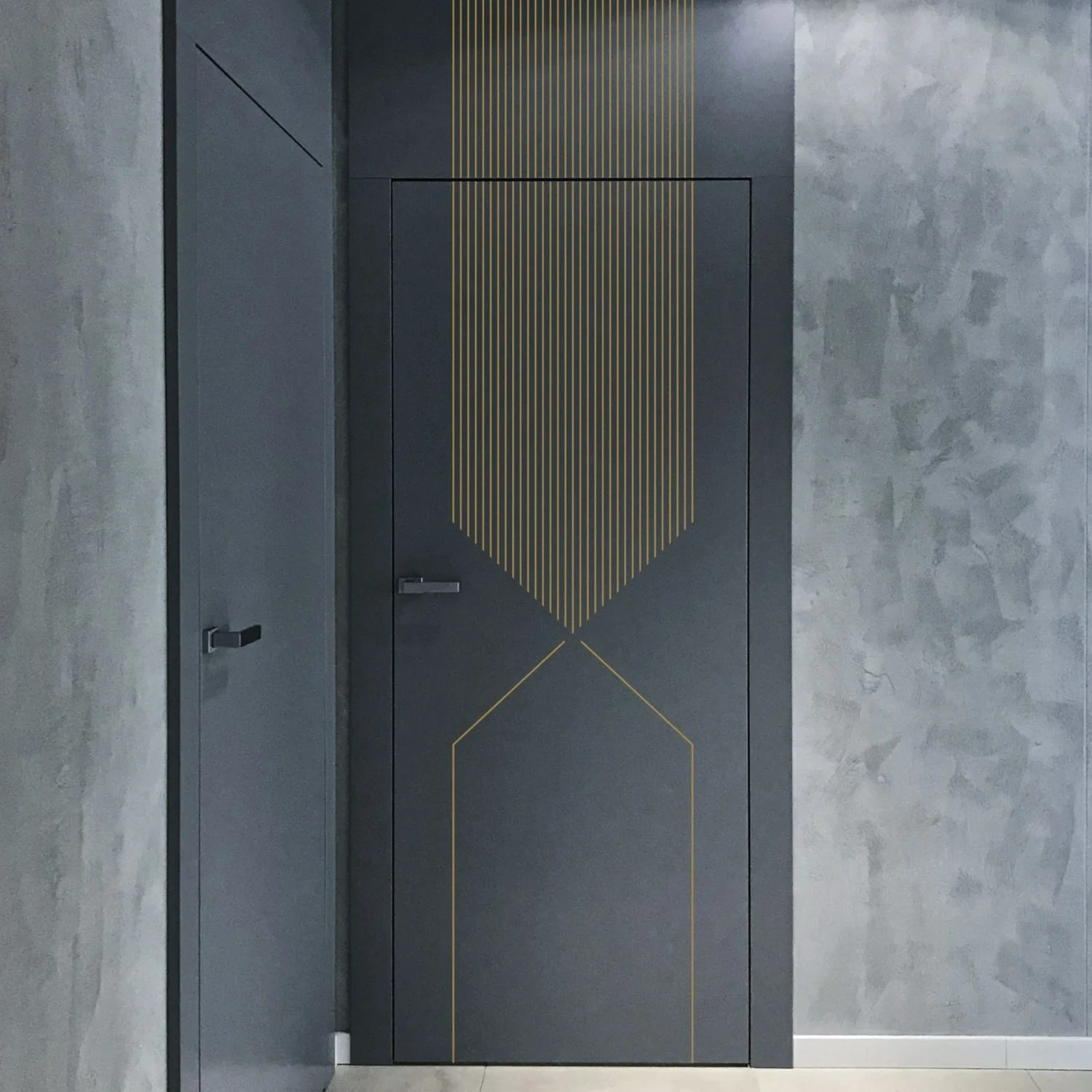
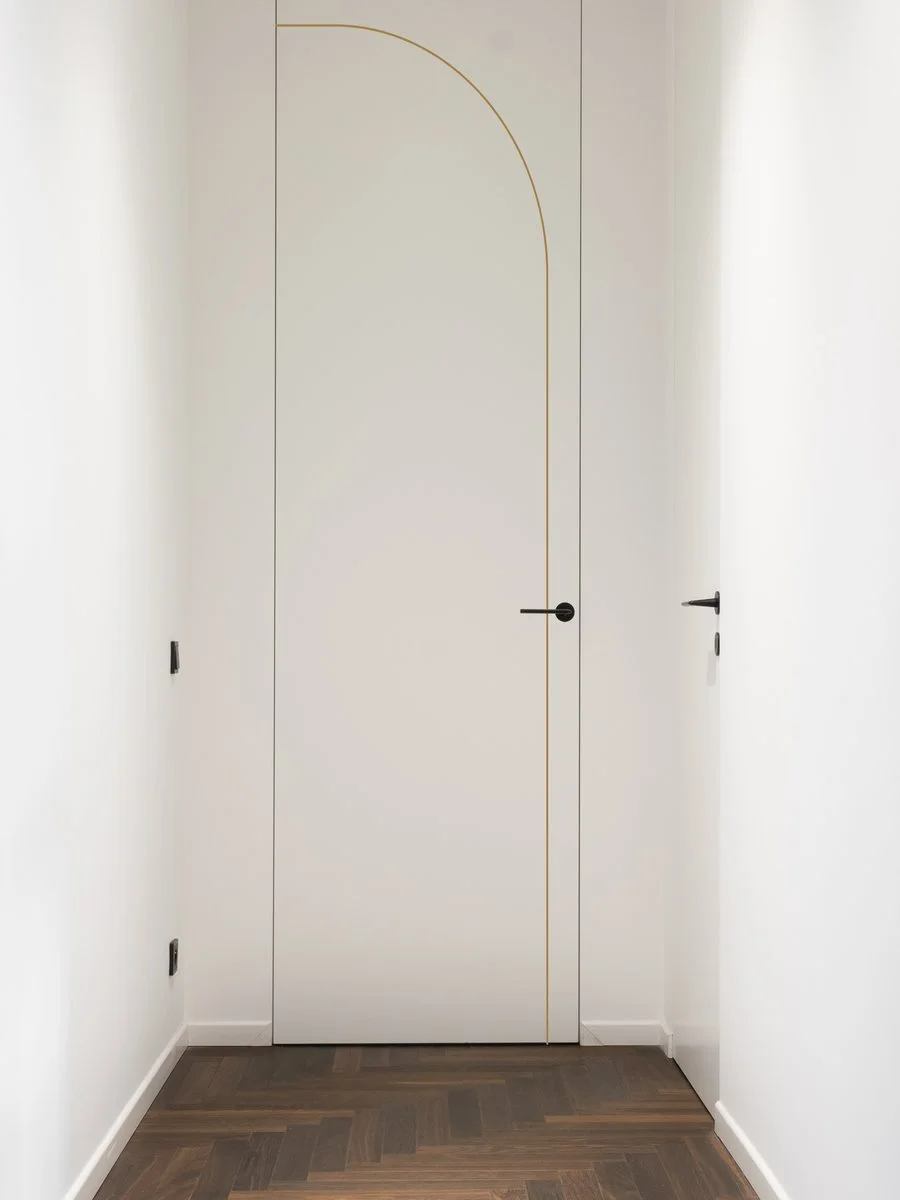
Two faces of one collection — a dense, gilded rhythm of lines on graphite, and a single, quiet arc on the white of a concealed leaf.
The strength of Geometria lies in its range. The same drawing can be a brilliant gilded accent on matt graphite, or a barely perceptible white trace sunk into the warm grain of oak. From a dense, rhythmic composition of lines to the extreme economy of a single arc — it is a graphic that matches its volume to the interior.
If Geometria is graphic, Element is sculpture. It is the second culmination — grown out of the concealed frame and going a step beyond disappearance itself. On the plane of the leaf appear raised 3D applications: a form one can touch, read not by light but by the shadow it casts.
The motif can pass beyond the outline of the leaf and continue onto the wall — the door spills, literally, into architecture. It no longer divides a space; it binds it. It is the same vanishing wall, suddenly given depth and texture.
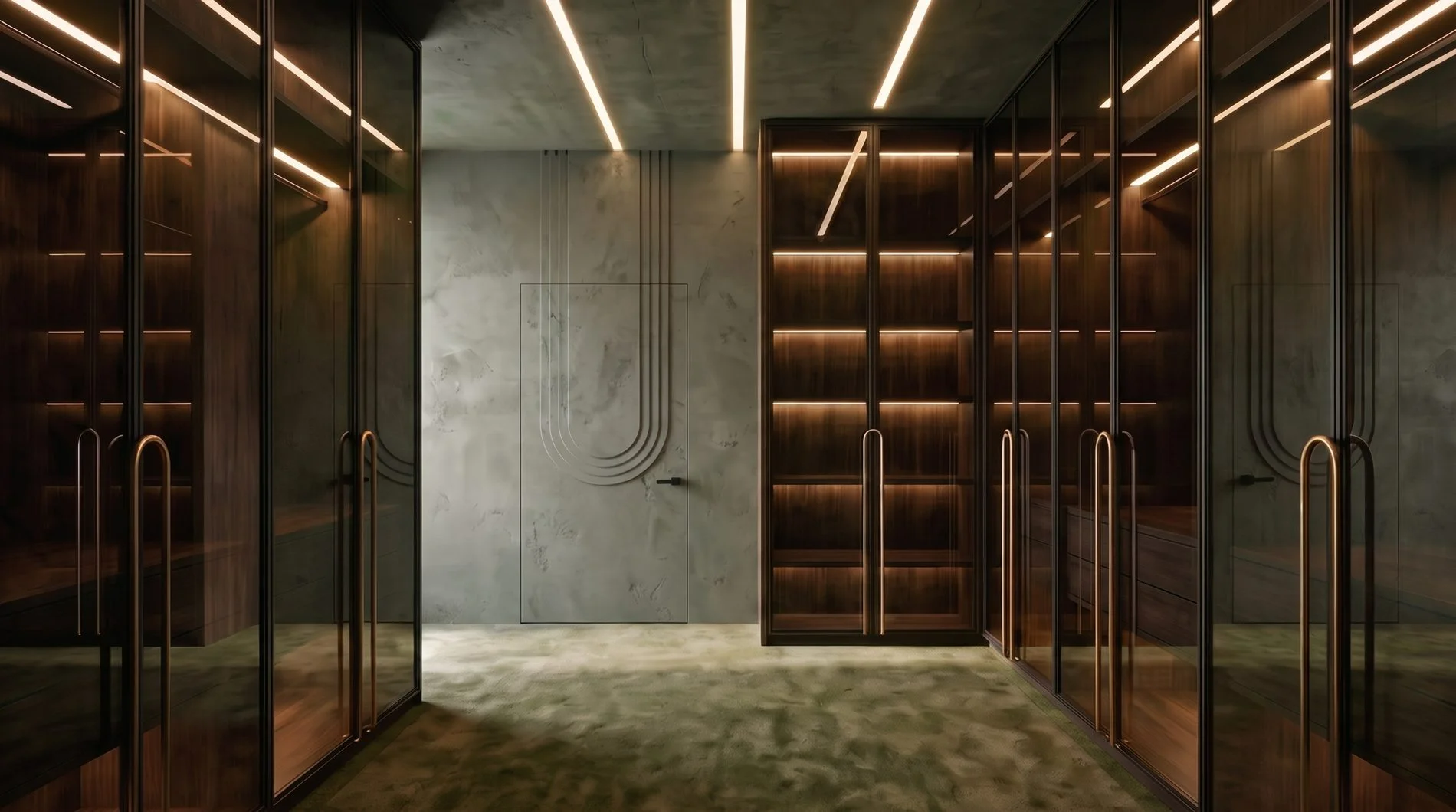
Element has two faces, however. The same leaf that plays in deep contrast in a dark interior becomes, in white, a relief of tone on tone — legible only at close quarters, in the play of a delicate shadow. It is the best possible proof of the collection's argument: minimalism held within a detail.
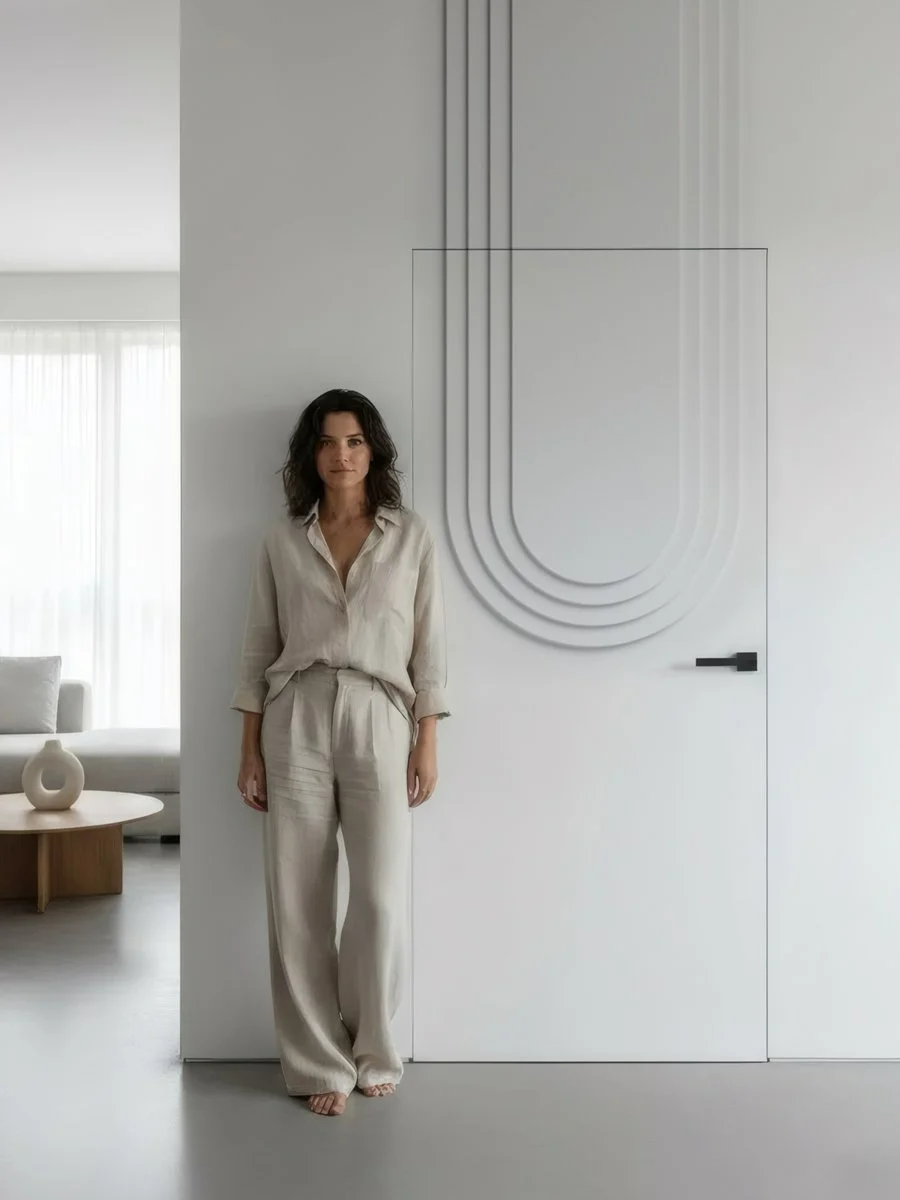
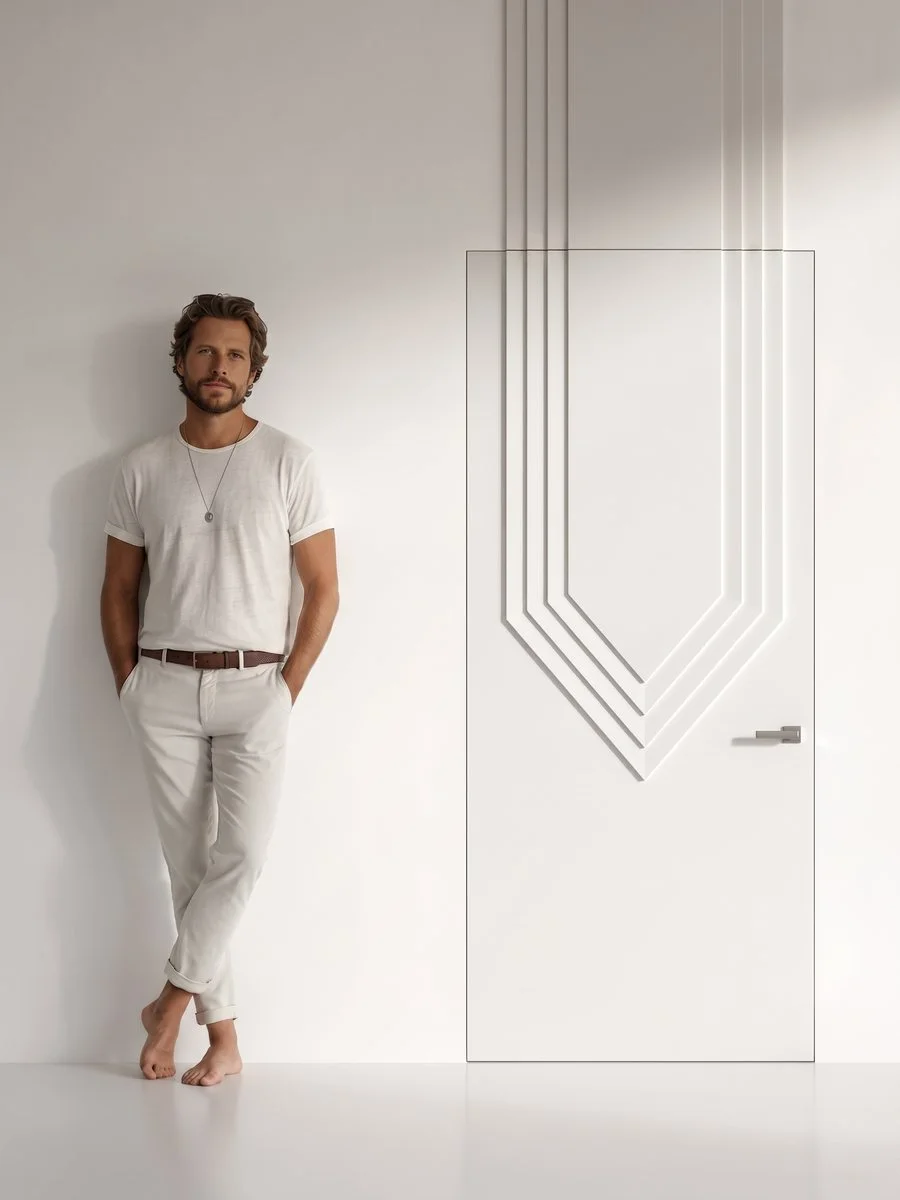
Element in the quiet register — in white the application is barely a touch, a relief of tone on tone that reveals itself only as the light moves.
The elements are its inspiration. Aqua — water: fluency, calm, and pure, undisturbed form. Ignis — fire: movement and visual depth that kindles a space. These are only the first two Elements; the next are already in hand. And because the whole is made of real timber, the leaf being wholly recyclable, this is a responsible luxury — in full accord with nature.
No technology here is better or worse — there is a choice of the language the interior should speak. The rebate is warmth, tradition and pragmatism. The rebateless leaf is reduction and precision: a door written into the wall. The concealed frame is the luxury of silence: a door that becomes part of the architecture. And where architecture is to speak, Geometria and Element enter — graphic and sculpture, two answers to the same question.
In choosing between them, you are not deciding on the door alone. You are deciding whether it is to be seen, felt — or admired.
Further parts of the Creadoor compendium
One rule that settles the direction in which a door opens.
Read the article →What cannot be seen — and what decides silence and long life.
Read the article →Veneer, lacquer, laminate — character, resilience, restoration.
Read the article →